


The honest answer: the gap is small
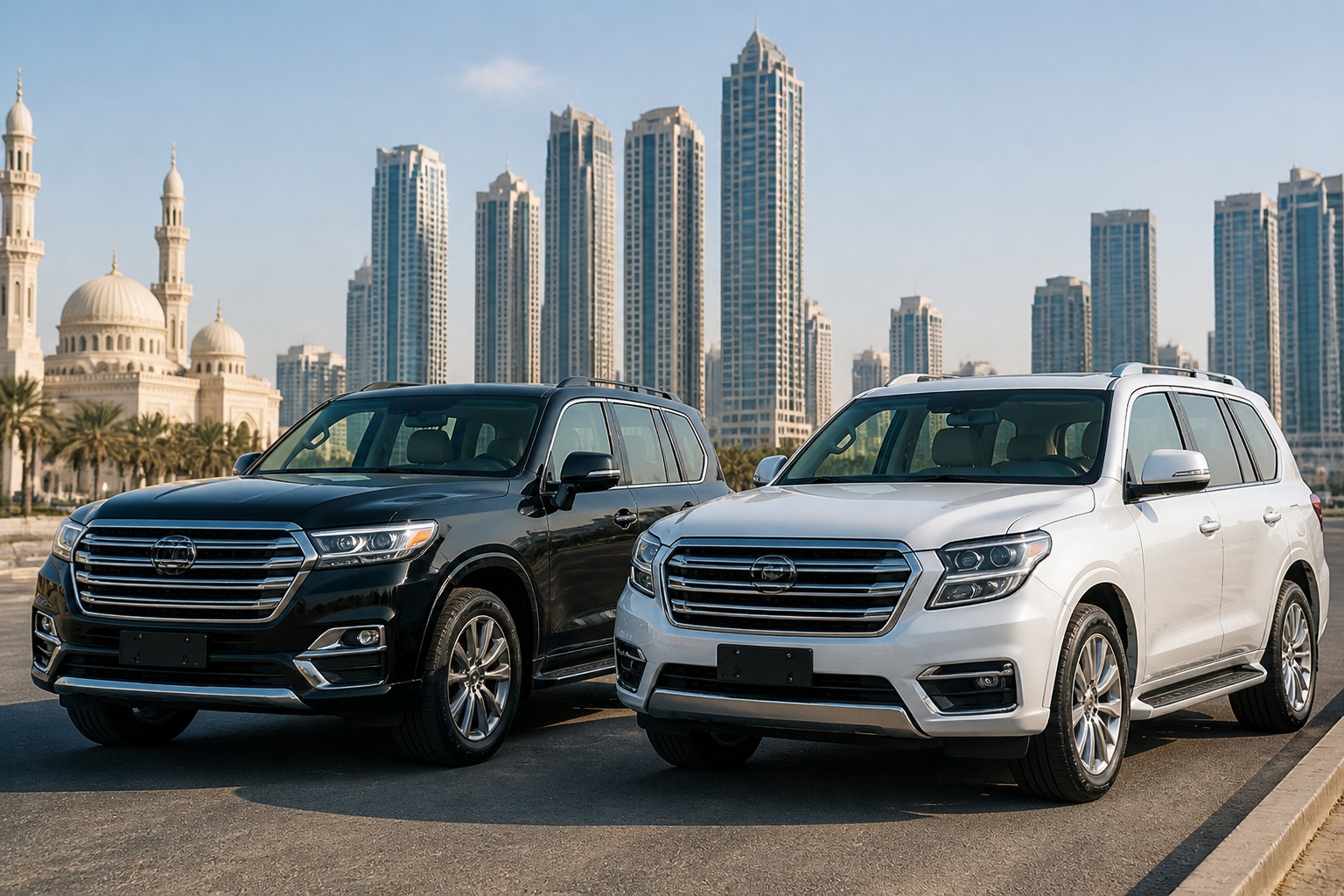
If you're hoping the Sharjah car market is dramatically cheaper than Dubai, the data doesn't back that up. Like-for-like, Sharjah listings sit roughly 1–2% below Dubai prices (CarSwitch listings data, July 2026). That's not nothing — on a car listed at AED 100,000, it's about AED 2,000. But the real savings in Sharjah come from something else: less competition from other buyers, especially on SUVs.
The short version
- Sharjah prices run about 1–2% lower than Dubai on the same car — meaningful on pricier models, negligible under AED 50,000.
- SUVs are oversupplied everywhere: 63% of listings but only 49% of buyer searches — that imbalance gives you leverage.
- On cars listed between AED 30,000 and AED 60,000, we've seen about 7% come off during negotiation.
- Cross-emirate transfers are straightforward — budget AED 500–700 in fees and an afternoon.
- Year-end is when more listings appear and fewer buyers are active. That's your window.
What the Sharjah car market actually looks like
Sharjah holds about 8% of all CarSwitch listings. Dubai holds 66%. That's a much smaller pool, but fewer eyeballs too. A car listed in Sharjah draws fewer competing buyers, which means less pressure to move fast and more room to negotiate.
Abu Dhabi sits in between — about 20% of listings, prices nearly identical to Dubai. Unless you live there, it doesn't offer a price advantage worth driving for.
The SUV oversupply — and why it matters in Sharjah
Here's where things get interesting. Across the UAE, SUVs make up almost two thirds of all listings. But only about half of buyer searches are for SUVs. That gap — supply outrunning demand — means sellers of sedans have a tighter market, while SUV sellers have to work harder.
In Sharjah, where there are already fewer active buyers, that oversupply hits harder. If you're shopping for a used SUV in Sharjah, you're in one of the softest spots in the market. Sedans? Less so — demand and supply are closer to balanced.
| City | Share of Listings | Price Index (national = 100) | Difference vs National |
|---|---|---|---|
| Dubai | 66% | 101 | +1% |
| Abu Dhabi | 21% | 101 | +1% |
| Sharjah | 8% | 99 | -1% |
How much room to negotiate
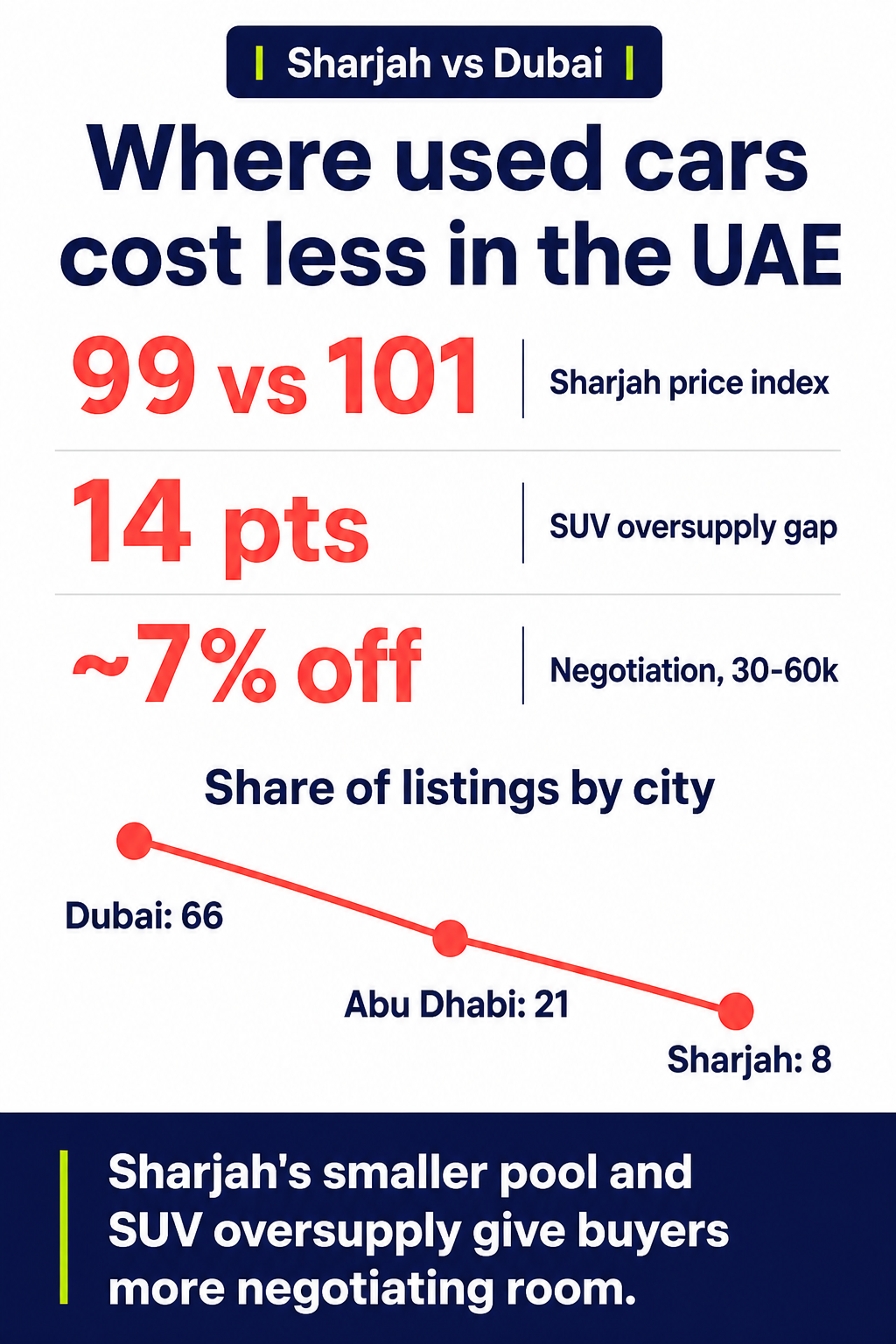
The price on the listing is a starting point. What we've seen on cars in the AED 30,000–60,000 range — where a lot of Sharjah inventory sits — is that about 7% tends to come off during negotiation. On cars under AED 30,000, that figure has been closer to 9%.
On a Sharjah-listed SUV at AED 55,000, that could mean roughly AED 3,500–4,000 off. Combined with the slightly lower asking prices, your total saving versus the same car listed in Dubai can reach 8–10% on a good day.
SUVs: 63% of listings, 49% of buyer searches — oversupplied by 14 percentage points
Sharjah price index: 99 vs Dubai's 101 (national baseline = 100)
Cars listed AED 30,000–60,000: we've seen about 7% come off in negotiation
Cross-emirate buying: how the transfer works
Buying a car registered in Sharjah and driving it in Dubai (or the other way around) is common. Here's what happens next:
- Clear any fines or mortgages. Check the seller's registration card. Outstanding fines or a bank lien will block the transfer.
- Get the car tested. Take it to an RTA testing centre in the emirate where you want to register it. The test costs around AED 120–200.
- Transfer ownership. Both buyer and seller visit the registration authority together. Bring Emirates IDs, the existing registration card, and your insurance certificate.
- Pay the fees. Registration, number plate, and testing fees usually total AED 500–700. Budget an afternoon for the whole process.
If you're buying a car that's already listed in Dubai and you live in Sharjah, the same steps apply in reverse. No complicated steps — just paperwork and a test.
Where the real value sits ahead of year-end
Prices in Q1 tend to run 3–4% higher than the annual norm. That means buying in Q4 — especially November and December — puts you on the right side of the calendar. More expatriates list cars before year-end relocations, and holiday spending dampens buyer activity.
Pair that timing with Sharjah's smaller buyer pool and the SUV oversupply, and you've got three things working in your favour at once. None of them is dramatic on its own. Together, they add up.
What to check before you commit
Price is only part of the story. A car with a minor accident on its history tends to list about 9% lower than an identical car with a clean record. That sounds like a saving, but make sure the repair was done properly.
Similarly, a base-spec car lists around 7% less than a fully loaded version of the same model. If you don't care about sunroofs and leather, that's real money back in your pocket. Focus on the service history and the inspection report — those matter more than the trim level on a five-year-old car.
Every car on CarSwitch goes through a detailed inspection. You'll know exactly what you're getting before you negotiate, whether the car's in the budget range or well above it.
Browse inspection-verified cars in Sharjah and Dubai
Whether you start in Sharjah or Dubai, every listing on CarSwitch is inspection-verified and transparently priced. Real people are here to walk you through the transfer if you're buying cross-emirate. Browse Sharjah listings or search Dubai — your next car might already be there.

 @gocarswitch
 TikTok @carswitchuae


